Chapter 11 — The Multiverse
Core Thesis
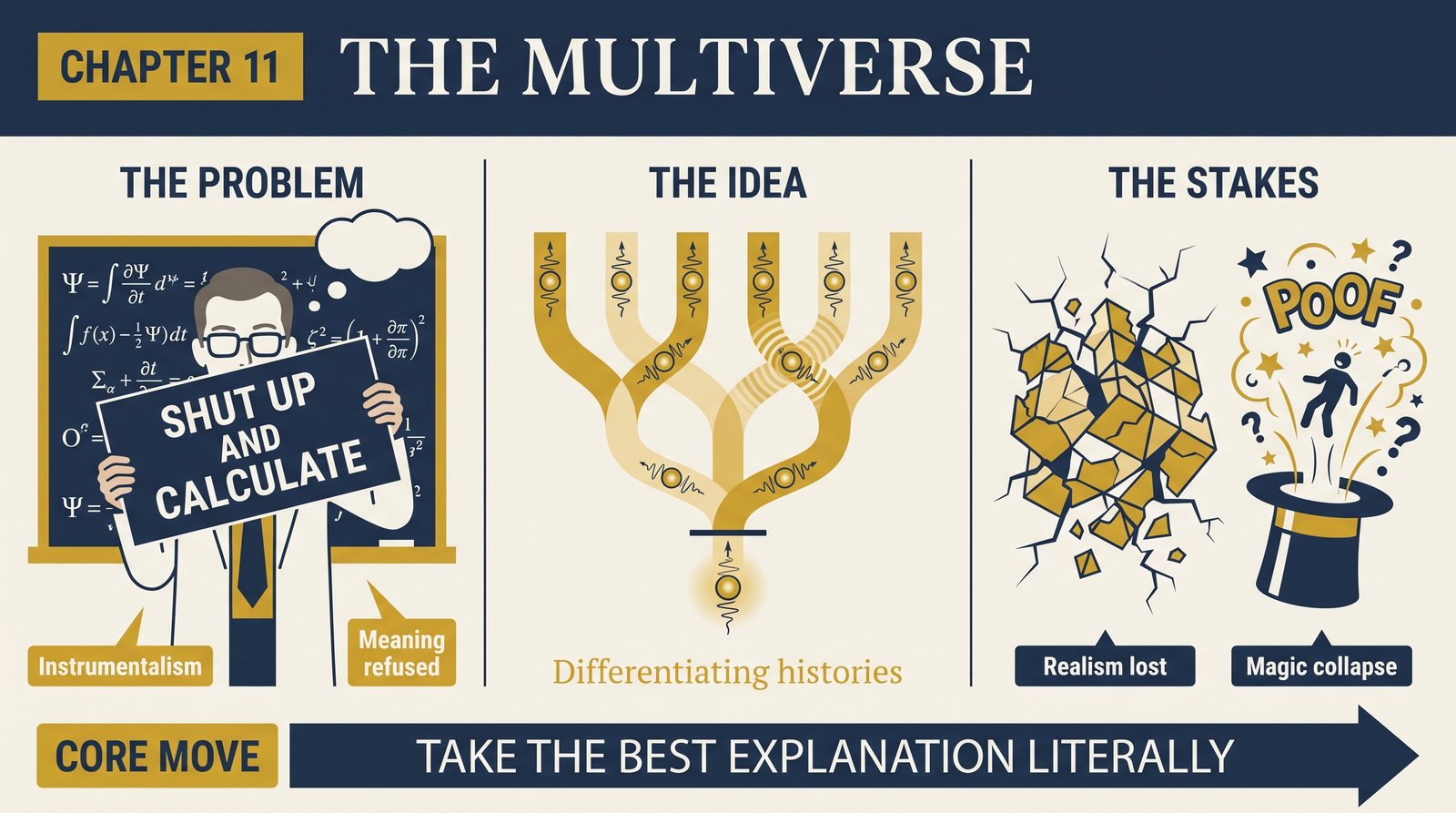
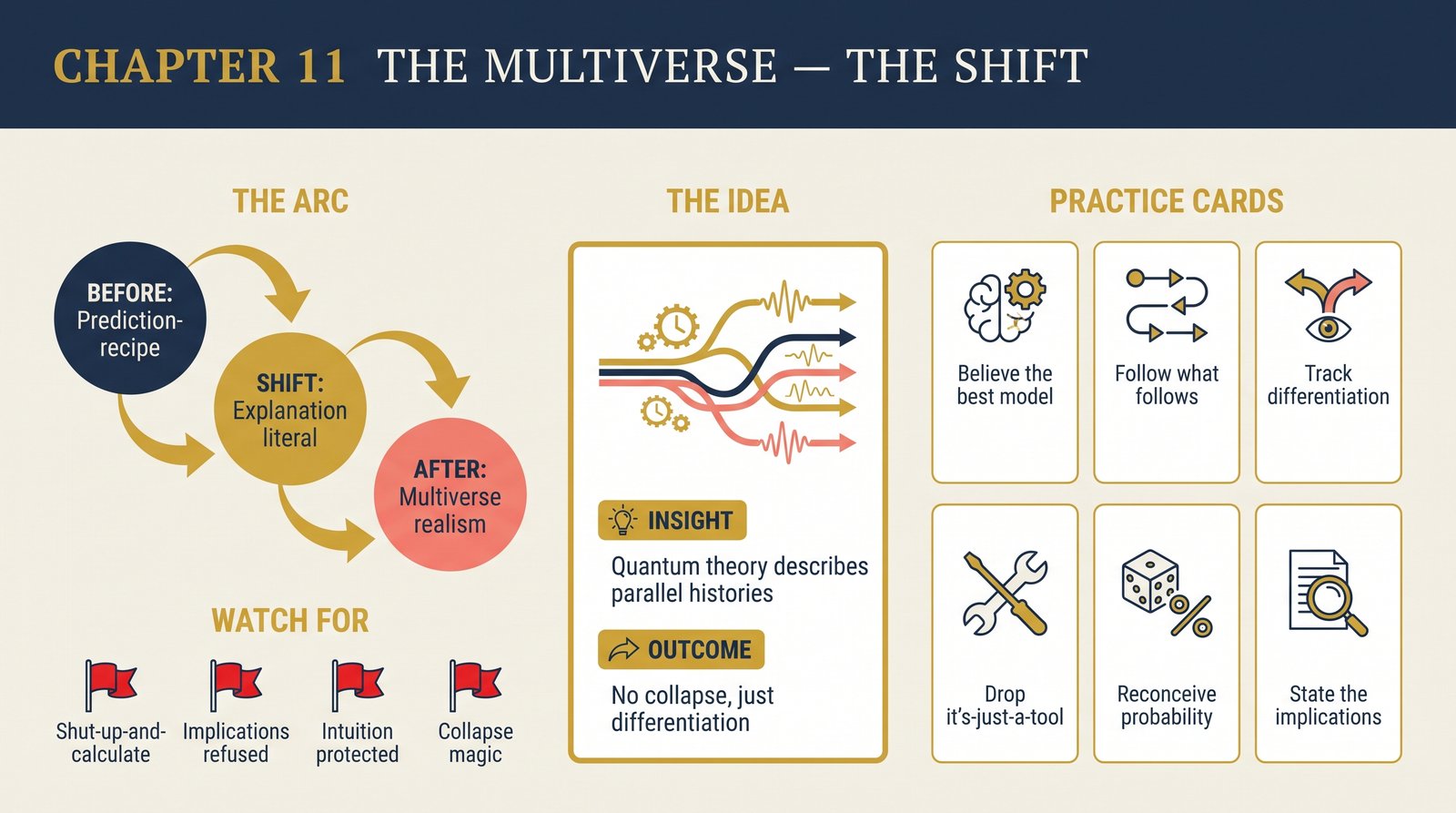
Quantum theory, read as an explanation rather than a prediction-recipe, describes a multiverse: an infinity of parallel histories, differentiating as physical systems interact. Deutsch builds the picture from first principles — fungibility (identical, interchangeable instances), waves of differentiation, interference as the fleeting reunification of recently-split histories — arguing this is not an interpretation bolted onto the mathematics but what the unvarnished mathematics says.
The Problem It Solves
Quantum theory's scandal: a century of magnificent predictions wedded to official meaninglessness ("shut up and calculate"). Single-universe readings must invent unexplained collapses triggered by ill-defined "measurements." The multiverse view needs no collapse: measurement is ordinary differentiation of histories, probability reflects the proportions of fungible instances, and the theory's realism is restored — at the price of ontological abundance.
Key Episode
The quantum interference experiment through multiverse eyes: a single photon "choosing" between paths is, in reality, fungible instances in briefly-diverged histories, recombining to produce fringes no single-history story explains without magic. Deutsch's pedagogical machinery — the fictional sci-fi transporter cases and gradually-diverging copies — trains the reader to think of identity, chance, and choice in a world where you are a bundle of fungible instances differentiating by the second.
The Shift
From instrumentalist quietism to taking the best explanation literally — the book's Chapter 1 criterion applied at physics' foundation. Probability is reconceived (proportions within the multiverse, not ignorance or propensity), and so is choice: decisions differentiate histories rather than select one, which Deutsch argues strengthens rather than dissolves personal significance — what you choose determines the measure of worlds that go each way.
Critiques & Rivals
Rival interpretations stand ready: Copenhagen (Chapter 12's target), pilot-wave theories (one history, guided), objective-collapse models (testably different, so far unvindicated), QBism (probability as agent's credence). The measure problem — why the Born-rule proportions? — remains the Everettian program's contested core (decision-theoretic derivations by Deutsch and Wallace claim to close it; critics dispute). The chapter is candid: this is the minority view defended as the only good explanation.
Modern Application
The transferable skill is explanatory literalism: when your best model says something uncomfortable, try believing it and see what follows, rather than adding epicycles that preserve intuition ("it's just a tool"). Teams do quantum-quietism constantly — using models whose implications they refuse to state. And from fungibility: when reasoning about copies, backups, and identity (in systems or thought experiments), track differentiation events, not labels.
Key Terms
- Multiverse — the totality of differentiating histories
- Fungibility — identity without distinguishability
- Differentiation / interference — histories splitting and briefly rejoining
Key Quotes
"The quantum theory of parallel universes is not the problem, it is the solution... it is the explanation — the only one that is tenable — of a remarkable and counter-intuitive reality."
"Anything that can happen does happen — somewhere in the multiverse."
Reflection Questions
- Which model do you use daily while refusing its implications — and what would literalism cost?
- Where does "it's just a tool" talk protect an intuition that deserves criticism?
- How does decision-making change if choices set measures rather than select outcomes?
Connections
- The instrumentalism this rejects: Chapter 12
- Good explanations taken literally: Chapter 1