Chapter 1 — Introduction: A Role for History
Core Thesis
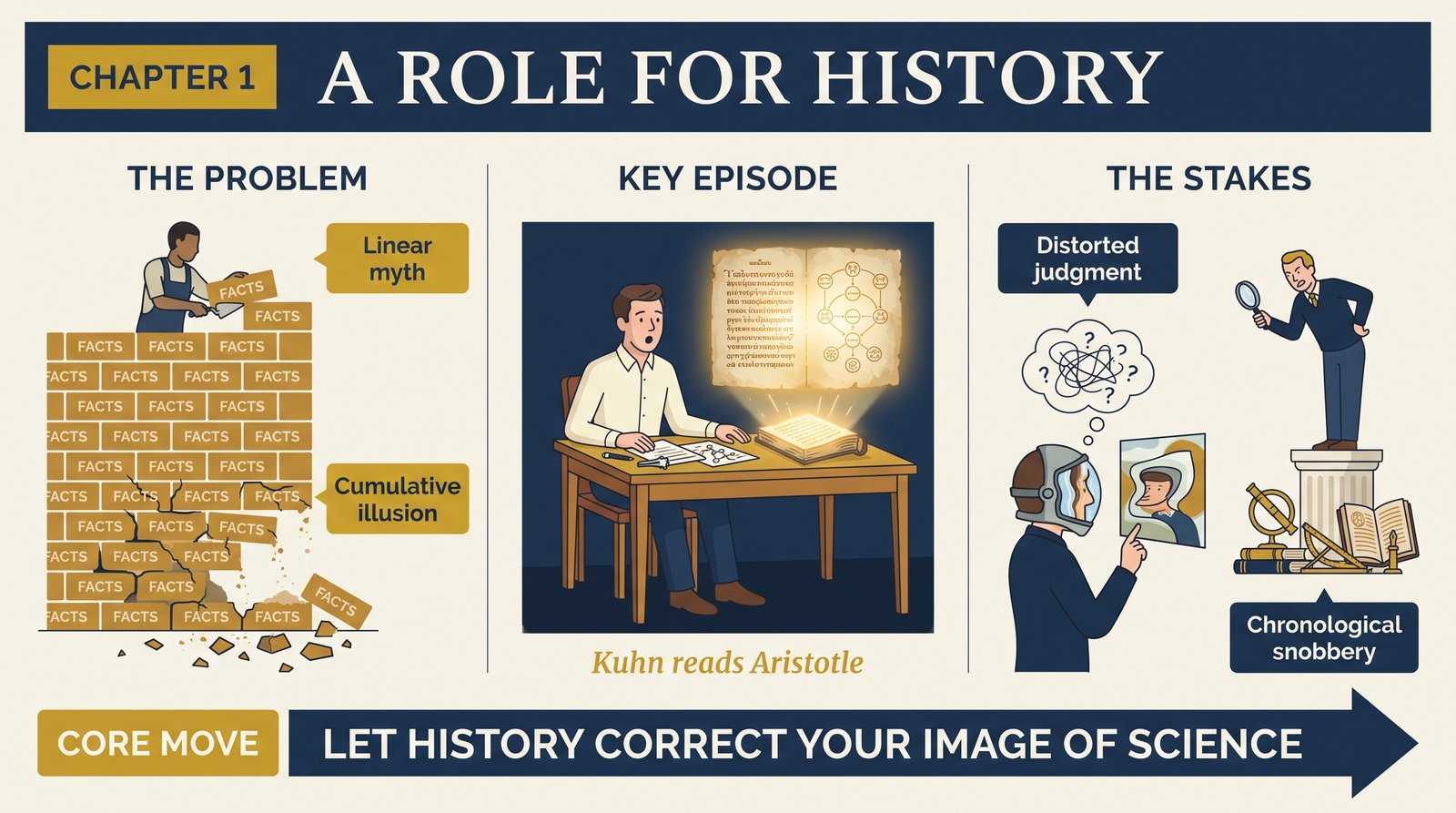
History of science, taken seriously, destroys the image of science we inherit from textbooks. Science is not a steady accumulation of facts, methods, and theories, each generation adding bricks to a growing wall. Kuhn opens by proposing that history could produce "a decisive transformation in the image of science by which we are now possessed." The book is that transformation: science advances through long stretches of tradition-bound work punctuated by revolutionary breaks that change what counts as a fact, a problem, and a solution.
The Problem It Solves
The received view — science as cumulative progress toward truth — cannot explain what historians actually find. Discarded theories like phlogiston chemistry or Aristotelian dynamics were not unscientific; they were practiced by rigorous communities using evidence and logic. If they were science, then science sometimes discards whole worldviews rather than refining them. If they were myth, then myth can be produced by the same methods that produce science. Either way, the textbook story collapses.
Key Episode
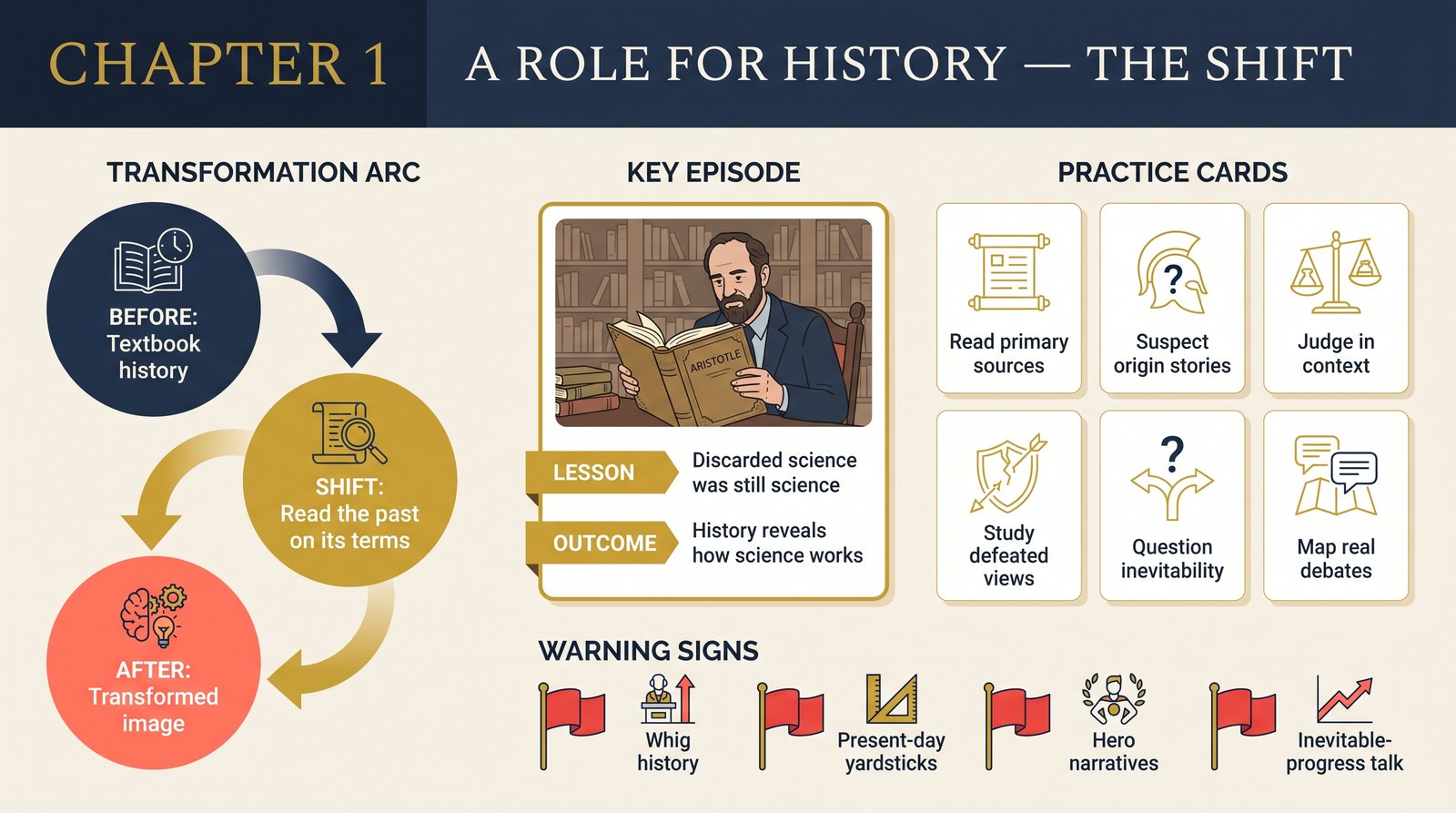
Kuhn's own conversion moment: as a physics doctoral student asked to teach a case history of mechanics, he read Aristotle expecting to find "bad Newton." He found instead a coherent, powerful system answering different questions with different concepts. Aristotle wasn't a worse physicist; he was playing a different game. That shock — the moment ancient science snapped into internal coherence — seeded the entire book.
The Shift
From evaluating past science by today's standards (Whig history) to understanding it in its own terms — its own problems, standards, and inner logic. Method becomes anthropological: study what scientific communities actually do, not what methodology textbooks say they should do.
Critiques & Rivals
Philosophers of the day (logical empiricists, early Popper) treated history as irrelevant to the logic of justification. Kuhn's move — making history evidence about the nature of science itself — was itself controversial. Critics later argued he blurred description and prescription: does how science has worked tell us how it should?
Modern Application
Any field's origin story deserves suspicion. Company histories, discipline textbooks, "the field progressed inevitably toward us" narratives — all are retrospective smoothing. Reading primary sources from a defeated tradition (in science, business, or politics) in their own terms is the fastest cure for chronological snobbery.
Key Terms
- Textbook image of science — science as cumulative, linear fact-gathering
- Whig history — judging the past by the present's standards
- Historiographic revolution — the shift to internalist, community-centered history of science
Key Quotes
"History, if viewed as a repository for more than anecdote or chronology, could produce a decisive transformation in the image of science by which we are now possessed."
"Out-of-date theories are not in principle unscientific because they have been discarded."
Reflection Questions
- What "textbook history" does your own field tell about itself — and what would a defeated rival tradition say?
- When did you last read a primary source from a viewpoint your field considers obsolete?
- If discarded frameworks were rational in their time, what current certainty of yours might be next?
Connections
- Sets up normal science and revolutions
- The textbook distortion returns in The Invisibility of Revolutions